
Description
This is a basic but extensive course in Organisation Development. Organisation Development (OD) is a behavioural sciences-based practice to help organizations build their capacities to adapt to challenges from inside and outside. OD practitioners (like people leading change and leading in change, or consultants helping them to do so) are trained to accompany teams in such change processes and help the organization to reach their goals in a more effective and efficient way. Modern approaches to Capacity Development as well as leadership and cooperation heavily draw on OD concepts and skills.
The programme comprises ten modules over the course of twelve months, from December 2025 to December 2026. Modules 1/2 and 7/8 (twin modules) which will take the form of four-day physical meetings in Hammamet, Tunisia. The other six modules will be synchronous online sessions. Peer learning groups between the modules, asynchronous e-learning modules for self-study, and a supervised ‘real-life’ OD project towards the end of the course complete the learning architecture.
The course uses an international standard curriculum developed by Dr. Thomas Rieger and his colleagues from Praxiss Training Institute/Jakarta and Almeisan Consult/Tunis.
For more comprehensive information, please download the flyer here. If you prefer to watch an animated version of the flyer, please click here.
What I will learn?
- This course will provide you with the necessary knowledge and skills to accompany and lead change processes within your own organization or that of your clients. It will provide you with:
- Personal growth by defining and developing your own personality and attitude as an OD practitioner, whether as a manager, internal advisor or external consultant.
- An insight into the profession by familiarising yourself with the field of OD and its various application areas.
- Diagnostic skills based on a solid understanding of social systems and their functions and dysfunctions.
- OD intervention skills - especially in process consul- tation mode - through experiential learning settings.
- Role consciousness in your helping actions - as a leader and a consultant.
- The programme comprises ten modules over the course of twelve months, from December 2025 to December 2026. Modules 1/2 and 7/8 (twin modules) which will take the form of four-day physical meetings in Hammamet, Tunisia. The other six modules will be synchronous online sessions. Peer learning groups between the modules, asynchronous e-learning modules for self-study, and a supervised 'real-life' OD project towards the end of the course complete the learning architecture.
- The course uses an international standard curriculum developed by Dr. Thomas Rieger and his colleagues from Praxis Training Institute/Jakarta and Almeisan Consult/Tunis.
Course Curriculum
Introduction and Orientation
We will start with creating a basic understanding of what Organisation Development ('OD') means, and where it is applied. You will receive an introduction to 'professional helping' be initiated to the 'process consultation' approach, which is equally relevant for accompanying change processes and leading people.
Understanding Process Consultation as a Core Technique of OD
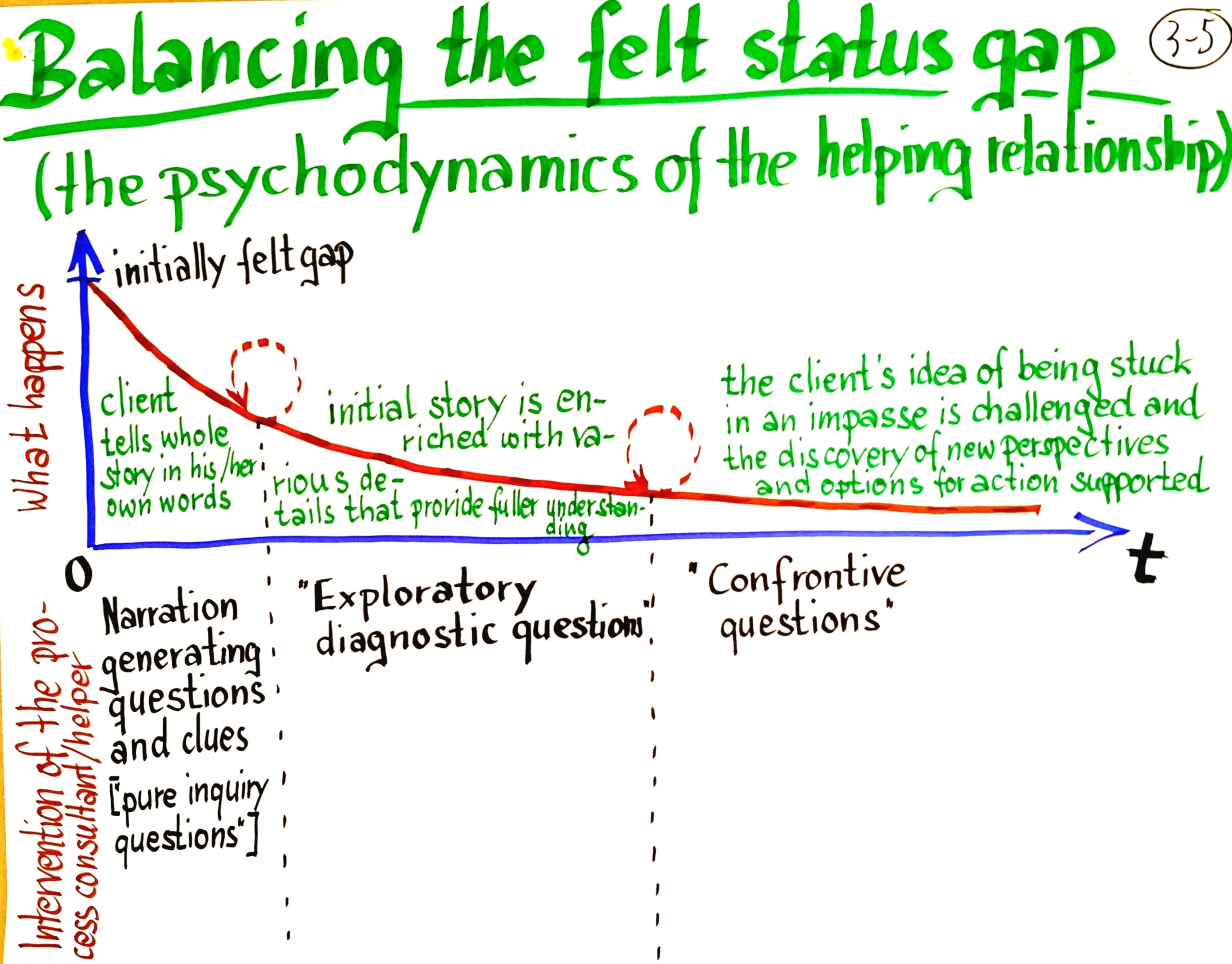
In this module you will deepen your understanding of OD as a ‘helping relationship’ and learn how to support organisations, groups and individuals in mobilising their resources to understand and solve their problems. Peer groups will be established to foster horizontal learning. Focus topics include the psychodynamics of a helping relationship, the principle of ‘working with ignorance’ and Process consultation as a building block for modern leadership approaches.
Understanding Social Systems
If you want to accompany organizations or teams in their development, it is essential that you understand how social systems work. This module introduces important con¬cepts such as constructivism and complexity, helping you develop a deeper understanding of the way social systems function and of the dynamics of their evolution.
Systemic Approaches for Interventions in Social Systems
Building on your understanding of how organisations work, this module will teach you how to design interventions to help organisations develop and change. Practical exercises and case studies will support your skill development.
How Social Systems Change
This module focuses on the processes of change within organisations or other social systems, including their overt and covert dynamics, the preconditions for gaining momentum and the roles taken by actors involved. Focus topics include typical phases of change processes, the way to deal with resistance against change, and the issue of individual and collective anxiety in change processes.
Change Management
Organisation Development belongs to the “Planned Change” school of thought – but what exactly can and must be planned in change processes known to be messy? This module 6 will familiarise you with tools for designing and facilitating change processes within groups and organisations.Focus topics include process models for change, how to lead change, and the micro-politics of change.
The ‘Gestalt’ Approach in Organisation Development
This is the second one of the two 'face-to-face' twin-modules - four days of immersive self-encounter experience, as an individual and as a group. The most effective support that we can lend as leaders to our followers or as advisors/consultants to our clients is through the attitude that underlies our shaping of contacts with the Other. Enhancing attitudinal skills is therefore a core objective of the course. From the different humanistic psychology schools that have influenced OD, the Gestalt approach offers the richest resources for addressing the emotionally challenging issues in leadership and change consulting. Focus topics will be basic concepts of the Gestalt approach and how to apply them to restore and advance the health of organizations and their ability to change.
Designing OD Interventions
In this module, we will take a closer look at the use of social experiments as a core building block of OD's behavioural science grounding. Additionally, insights from the learning projects will be presented, as well as a discussion of the techniques acquired in this course. Focus topics will include the dfferent forms of social experiments (role plays, simulations, sociometric exercises etc.) and how to apply them, and options for coping with crises as a leader or an advisor/consultant.
Topics of Choice and Closing
In this final module we will set aside time for additional topics requested by participants, such as the basics of group dynamics, conflict management and organizational culture. A thorough reflection and evaluation will then close the Gestalt of this joint learning journey.
Enrolled:2
Course level:Intermediate
Course Duration:
190h
Last Updated:October 20, 2025
Target Audience
- Entrants must have a minimum of five years' work experience in an advisory or managerial position (or any combination of these), as well as a well-developed sense of self-awareness and a readiness to engage in further growth.